Build on This / Metaz.com
A home for production-ready 3D assets
Your 3D catalog has a home that can grow from one collection into a working library.
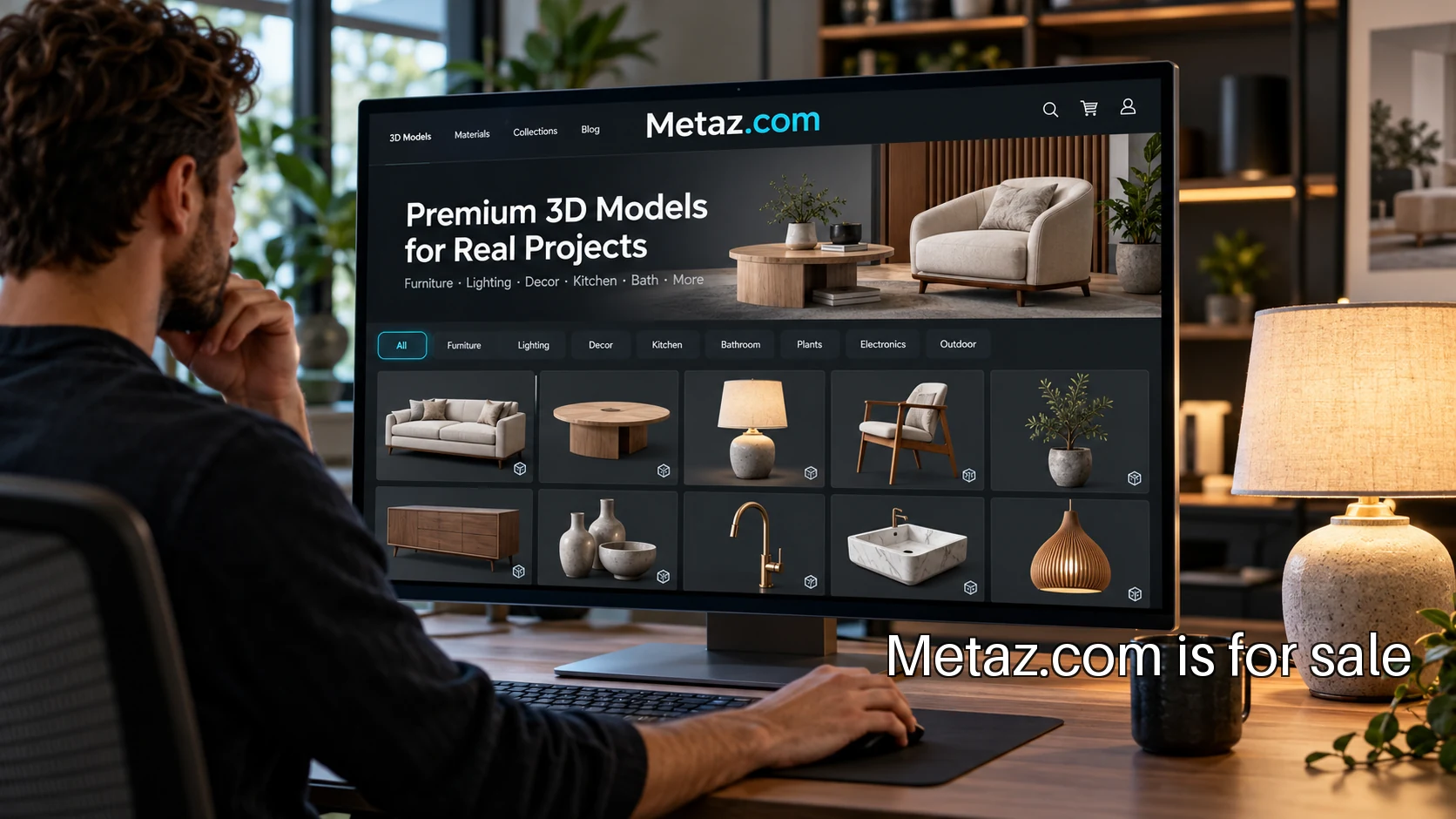
A Metaz asset library could help a specific group of 3D practitioners find prepared objects they can actually use. The opportunity is narrower than a vast marketplace of attractive thumbnails. It starts with a defined collection, a consistent preparation standard and a dependable handoff into the tools the buyer already uses. The founder can build a recognizable product around that standard while using Metaz as the identity across collections.
Choose a collection with a recurring job
I would start with one class of assets and one buyer workflow. A useful example is furniture and fixtures for commerce product scenes. A commerce artist might need objects with understandable scale, sensible pivots, manageable materials and clear licensing. The first collection could contain a small furniture collection and the objects needed to stage a consistent product scene. Every asset would have a purpose within that use case.
The catalog should explain what is ready and what still needs work. An object can look convincing in a render while being unsuitable for a particular engine or device. A preparation checklist would cover dimensions, orientation, texture sizes, level of detail, collision requirements and supported formats. The exact checklist depends on the first workflow. Publishing it turns an ambiguous claim of quality into a standard the founder can inspect and maintain.
A small collection can be evaluated more thoroughly than an open upload marketplace. It also makes the first offer easier to demonstrate. A visitor could download a representative sample, open it in the supported environment and compare the result with the listing. That is a complete test of the handoff, with the same Metaz identity on the listing, file package and supporting documentation.
Treat metadata as part of the asset
Search depends on descriptions that match how people work. Category and visual style are only the beginning. A commerce artist may need to know whether a door opens, whether the object has separable parts or whether a label is baked into a texture. A catalog that records those details can help users make a useful decision before downloading a large package.
I would keep the first metadata model deliberately small. Each object would have a stable identifier, a revision, a license, a preparation status and a list of supported uses that have actually been tested. A change log would explain when a new version changes geometry or material behavior. Existing projects may depend on the older package, so a library should distinguish updating a listing from silently replacing its contents.
Technical conventions should be linked rather than reinvented casually. The glTF 2.0 specification describes coordinate systems, units and packaging requirements relevant to interchange. A founder can use those definitions to inform validation. The listing still needs to state what was tested in the actual delivery format and environment.
Make licensing understandable at the point of use
A collection is difficult to adopt if people cannot tell which uses are allowed. The library would need a clear license reviewed for the intended business model, along with evidence that contributors have the rights to supply each object. A preview should show a readable license summary and a link to the complete terms. A project handoff should retain the relevant license and asset identifiers so the receiving team can trace what it has.
This is also a reason to begin with a curated collection. The founder can work through provenance, documentation and package consistency with a small group of contributors. An open marketplace adds moderation, disputes and a much larger verification burden. Those are possible later responsibilities, but they should not be implied by a first catalog that has not built those processes.
The operating work includes answering questions about a specific asset, correcting a package and communicating changes. A support request should reference the exact revision. If a pivot is corrected, the release note needs to say whether it may affect existing scene placement. These small details make the library a product with a defined maintenance process.
Validate the complete handoff
A first pilot could ask a handful of three commerce studios to build a product scene from the collection. The evaluation would cover discovery, download, import and placement. Ask them to find an object with a specific behavior, rather than simply browse until they see something attractive. Then watch what extra work they need before the object is useful.
The founder could record failed searches, import corrections, missing documentation and requests for variations. Those observations would determine the next collection. A repeated need for configurable furniture might justify a deeper range in that category. A broad request for unrelated assets should be considered against the preparation standard and the team's ability to maintain it.
Distribution could grow through a public sample pack, practical import guides and relationships with commerce artists and visualization studios. A useful guide would show the exact preparation conventions and their limitations. The OpenUSD introduction offers context for scene assembly and layered contributions if that pipeline becomes relevant. Supporting another pipeline would mean testing and documenting it as a separate product commitment.
A catalog can become a recognizable body of work
Metaz gives the founder a name that can hold several carefully defined collections without naming the company after one type of object. A first furniture pack could become a library organized around a consistent preparation standard. The company can keep its identity as its coverage grows, while each listing remains precise about what the user receives.
This is an illustrative product direction for a buyer of the name. The founder would build the collection, rights process and maintenance discipline. Metaz could be the name on that continuing work, from the first sample download to a library with a clear point of view.
From spatial prototype to product company
Put Metaz on the work ahead.
Discuss Metaz.com for the spatial-software company you are building.
Inquire about Metaz.com